
How Long Does an Electrical Panel Upgrade Take?
Last Updated: October 31, 2026
Quick Summary
A straightforward electrical panel upgrade is usually completed in a single workday, though the exact time depends on the home and the condition of the existing wiring. Complex jobs take longer, and the full project can stretch across several weeks once permits and inspections are counted.
A standard panel swap typically takes 4 to 8 hours of crew time on installation day.
Complex installations can take one to two days, and rewiring can add one to five days.
Permit review commonly takes 3 to 10 business days, depending on local backlogs.
Utility disconnect and reconnect scheduling can add 2 to 15 business days.
A service-capacity upgrade by the utility can add one to three weeks to the project.
Table of Contents
How Long a Typical Electrical Panel Upgrade Takes
A straightforward electrical panel upgrade is usually completed in a single workday, though the exact time depends on the home and the condition of the existing wiring. Complex jobs take longer, and the full project can stretch across several weeks once permits and inspections are counted.

Those two timelines are easy to mix up. The first is the time a crew spends working in your home. The second is the full project, from the first permit application to the final approval. Keeping them separate will help you plan your household around the right number.
The schedule can grow when the job includes rewiring or added upgrades.
The Electrical Panel Upgrade Process, Step by Step
Most upgrades follow the same sequence, but the time each step takes varies widely. Treat the general sequence below as a planning guide, not a guarantee, your electrician should confirm the details after the site assessment.
Step | Who handles it | Typical duration | What can stretch it |
Assessment and quote | Licensed electrician | 1-2 hours on site | Hidden wiring, undersized service entrance, crowded panel location |
Permit application and review | Electrician files; jurisdiction reviews | 3-10 business days | Local backlogs, incomplete load calculations, historic-district or flood-zone review |
Utility coordination | Electrician requests; utility schedules | 2-15 business days | Utility disconnect/reconnect queue, meter relocation, service-capacity change |
Installation day | Crew of 2 (journeyman + helper) | 4-8 hours for a standard swap; 1-2 days for complex jobs | Rewiring, code corrections, panel relocation, weather if work is outdoors |
Rough inspection (if required) | Local inspector | 1-3 business days to schedule | Inspector availability, corrections |
Final inspection and sign-off | Local inspector | 1-3 business days to schedule | Corrections, utility reconnect timing |
What each step actually involves
Assessment and quote. The electrician verifies your current service size, checks the meter base and service entrance conductors, and confirms whether the panel can be swapped in place or needs to move. This is also when the contractor identifies whether a service upgrade, not just a panel swap, is required.
Permit application. Permit requirements and review times depend on the local building department, and the permit is typically filed by the licensed contractor.
Utility coordination. If the service disconnect is at the meter, the utility must schedule a disconnect and later a reconnect. The utility's scheduling is outside the contractor's control, and a service-capacity increase may also require the utility to upgrade the service drop or transformer.
Installation day. The crew shuts off power, removes the old panel, mounts the new one, transfers and labels each branch circuit, and tests before re-energizing.
Inspection and final approval. The inspector verifies grounding and bonding, conductor sizing, breaker compatibility, and clearances. A failed inspection means corrections and a re-inspection, which can add several days.
Pro Tip Ask your electrician for the permit number and the utility work-order number once they are issued. Those two references let you track the two biggest schedule variables yourself instead of waiting for a status update.
Before the Crew Arrives
Permit approval timing depends on your city or county, and some areas move faster than others. Ask your electrician how long permits typically take in your jurisdiction, and ask whether the utility requires a separate disconnect request.
You can help by clearing access to the panel and the work area. Move furniture, stored items, and pets away from the utility room. Confirm the panel location is reachable and that the electrician can park close enough to carry tools and the new panel. Let your household know the power will be off for part of the day, and plan for any medical equipment, home-office, or refrigeration needs in advance.
On-Site Work on Installation Day
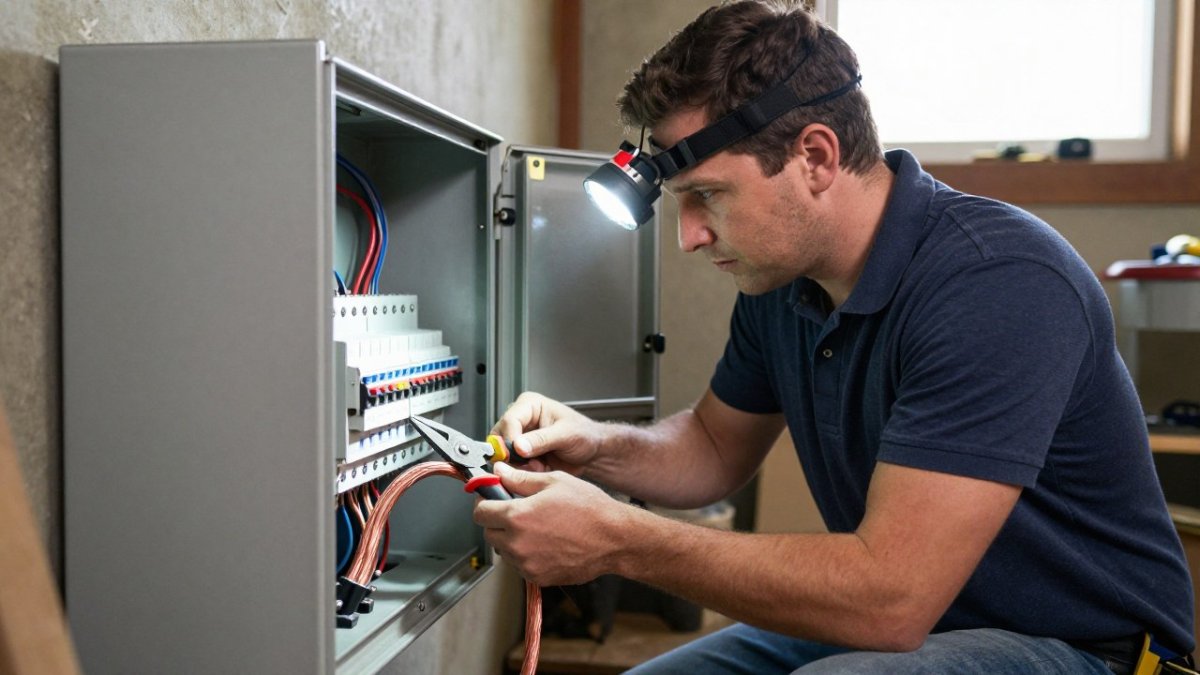
On installation day, the crew shuts off the main breaker and works through the old panel. They mount the new unit, move each circuit over, and label everything clearly. Testing comes last, before the power goes back on.
If the crew finds outdated wiring or code problems, the job can run longer.
How Long the Power Is Off During Panel Replacement
The exact length of the power outage depends on the job, and the utility may need to disconnect service at the meter before the crew can work safely. Reconnection happens after the new panel passes its checks.
Factors That Extend the Electrical Panel Replacement Time
Several factors can add days, or, in the worst cases, weeks, to the schedule. The table below pairs each factor with a typical added delay and what you can do about it.
Factor | Typical added time | What drives it | What you can do |
Service-capacity upgrade | 1-3 weeks | Utility must upgrade the service drop, meter, or transformer; new load calculation and permit revision | Confirm the service size with your electrician before signing; ask the utility for its upgrade lead time |
Rewiring or circuit repairs | 1-5 days | Knob-and-tube, aluminum branch wiring, or damaged conductors found after the panel is open | Request a pre-installation inspection of visible wiring |
Permit review backlog | 3-15 business days | Local building-department volume, plan-review requirements, historic or flood-zone review | Ask the contractor for the jurisdiction's current review time before scheduling |
Utility disconnect/reconnect scheduling | 2-15 business days | Utility crew availability, weather, meter-access requirements | Have the contractor submit the utility request as soon as the permit is issued |
Inspection corrections | 2-10 days | Grounding/bonding issues, breaker compatibility, clearance problems | Ask the electrician to self-inspect against the local checklist before calling for inspection |
Panel relocation or access problems | 1-2 days | Cramped utility closets, finished walls, asbestos or lead paint in older homes | Clear the area and disclose any known hazardous materials |
Equipment availability | 3-10 days | Panel and breaker backorders, particularly for specialty or high-amperage panels | Ask the contractor to confirm the panel is on hand before the install date |
Weather (outdoor or service-entrance work) | 1-3 days | Rain, wind, or extreme heat that prevents safe work at the meter | Build a weather buffer into the schedule |
The two factors that matter most
Utility scheduling is generally outside the contractor's control, and hidden wiring conditions can only be fully discovered once the panel is open.
Watch Out If your home was built before 1980, ask the electrician to check for aluminum branch-circuit wiring and undersized grounding. Either condition can turn a one-day swap into a multi-day repair and may require a permit revision.
Scheduling Your Panel Upgrade in Maryland or Washington D.C.
If you're ready to schedule a panel upgrade, start with a licensed electrician. book a panel upgrade consultation with our team, or explore our commercial electrical services if you manage a larger property.
When you're ready, contact Best Quality Electric, LLC or call 410-384-8520 to request a quote and an appointment.
Frequently Asked Questions
Can I upgrade my electrical panel from 100 to 200 amps?
Yes, in most homes a 100-amp panel can be upgraded to 200 amps. The utility may also need to upgrade or verify the service drop or meter base, and the local permit office may require an inspection. Whether the home needs anything beyond the panel depends on the existing wiring and how many circuits are in use. A licensed electrician can assess the load calculation and tell you what the upgrade will involve before any work begins.
How long will the power be off during an electrical panel upgrade?
Power is off while the old panel is removed and the new one is connected. Because the utility may need to disconnect and reconnect service, the outage can run longer if coordination is involved. Your electrician should tell you the expected shutoff window and when to expect the lights back on, so you can plan around refrigeration, medical equipment, and work-from-home needs.
Does an electrical panel upgrade require an inspection?
Permit and inspection requirements depend on the local jurisdiction, and inspection scheduling can add days to the overall project. Ask your electrician which permits and inspections apply to your job.


Comments